State parks in the U.S. are facing a challenge that should be a success story: More people are seeking out everything the parks have to offer, including the opportunity to access nature closer to home.
Outdoor recreation has been on a steady incline for the last several years, as people are looking for new ways to disconnect in nature, new places to camp, and new experiences on public lands. And with state parks seeing record visitation, the communities that surround them benefit from the increased tourism. Our team has seen this effect first-hand, in our backyards in Michigan, Colorado, and California.
But the infrastructure supporting these experiences has not kept pace, and many parks are operating with systems designed decades ago. This includes aging facilities, limited utilities, outdated accommodations, and infrastructure that wasn’t built for today’s level of demand, especially amid growing EV adoption.
And while a tempting solution might be to simply build more infrastructure, the real challenge is to build it differently.
Infrastructure Built for a Different Era
Traditional infrastructure development involves planning, permitting, funding, and building processes that can take years and cost millions of dollars. That timeline might make sense for permanent structures that are expected to serve the same purpose for generations.
But public lands are dynamic. Things like visitor patterns, climate conditions, communities, and technology can (and do) change rapidly, and as they do, the needs of state parks change as well. A campground that made sense 30 years ago may not serve the visitors of today, and certainly not those of tomorrow.
The next generation of park infrastructure needs to meet these evolving demands by being deployable, flexible, resilient, and low-impact. The goal should be to expand access to nature by building infrastructure that can operate through disruptions and changes in environmental conditions, without being limited by multi-year construction timelines.
And this is where modular infrastructure becomes important. Instead of building around permanent, one-time construction projects, parks should begin thinking in terms of adaptable systems that can be scaled over time and upgraded instead of replaced.
The Energy Independence Issue
One of the biggest barriers to expanding infrastructure in remote locations is access to energy. Extending utilities to new areas can be expensive, slow, and disruptive to nature—but without reliable power, many modern amenities just aren’t possible.
Reliable energy enables more than electricity. It supports improved visitor experiences, remote operations, water and waste systems, communications, safety systems, emergency response capabilities, and more. This is why energy independence and energy resilience are increasingly becoming key parts of infrastructure planning.
We’re not arguing that every park or campground needs to be able to operate completely independent from the grid. But having the ability to generate and manage power locally creates a whole lot more options.
A New Model for Public Land Infrastructure
Improving infrastructure in natural spaces doesn’t automatically mean making these spaces less natural, or less special. Rather than building more of the same, the future-proof approach includes creating systems that allow more people to experience these places while respecting the environments that make them valuable.
With less dependence on large-scale construction comes more flexibility and smaller footprints. The goal should be making parks more accessible, resilient, and operationally sustainable.
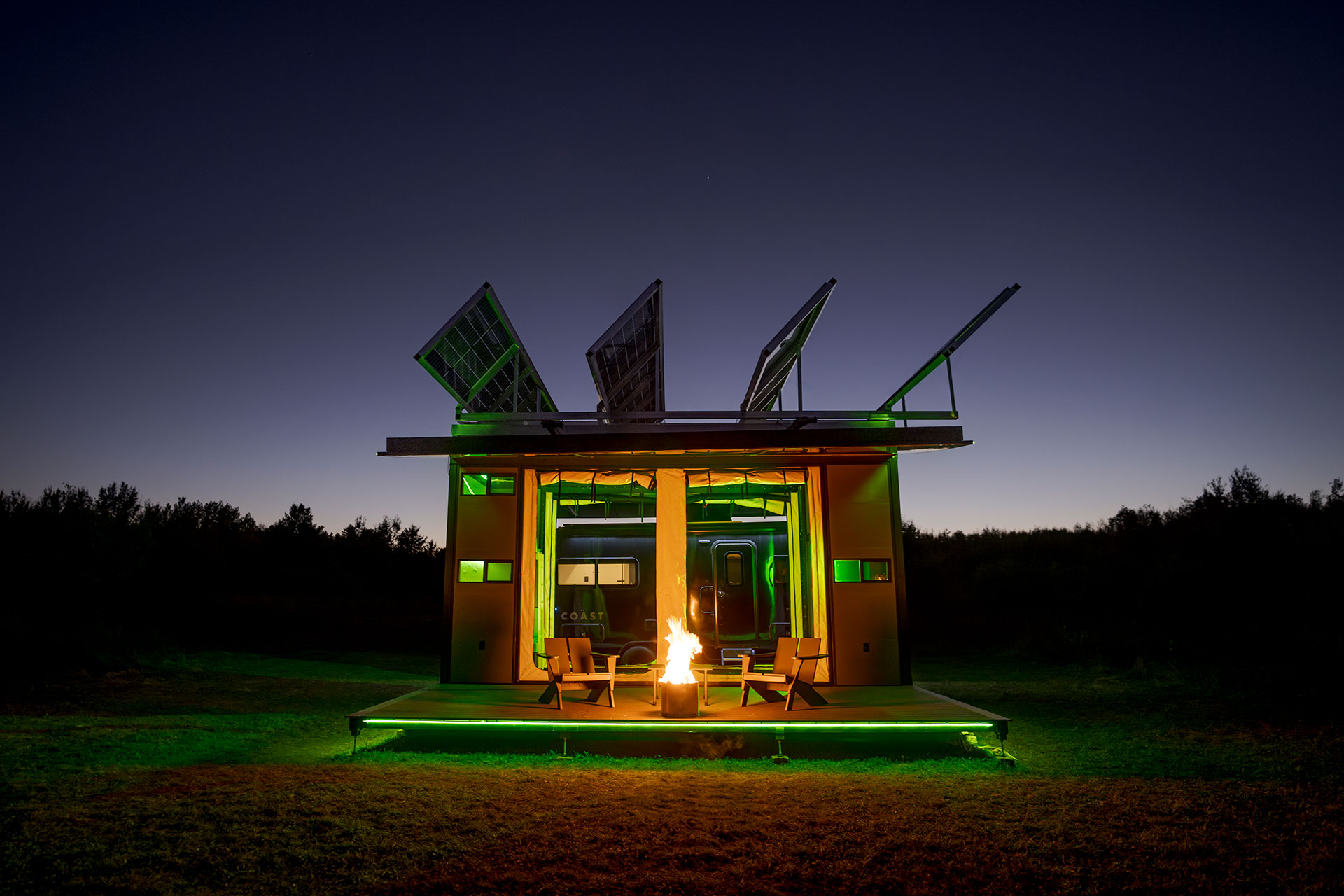
At Electric Outdoors, we believe that the future of outdoor infrastructure is modular, resilient, and quickly deployable. We’re building off-grid infrastructure backed by a software platform that becomes smarter with every deployment. The system is designed to support changing needs over time. This can include everything from lodging that can quickly increase capacity during peak seasons, to temporary facilities after a natural disaster, to reliable infrastructure for remote locations without the headache of grid expansion.
These are all examples of the same challenge: How do we create infrastructure that can go where it’s needed, when it’s needed?
Our Perspective
Public lands are some of our most valuable assets. They support recreation, tourism, conservation, community, and economic growth. But preserving these spaces doesn’t always mean leaving them completely untouched. Rather, it means being thoughtful about how we invest in them.
The next generation of park infrastructure should not be defined by bigger projects and longer timelines. It should be defined by smarter systems that are faster to deploy, easier to adapt, and more resilient.
When infrastructure works better, it gives more people access to the outdoors.
→ To learn more about how Electric Outdoors’ distributed energy infrastructure systems can help state parks become future proof, contact us today.