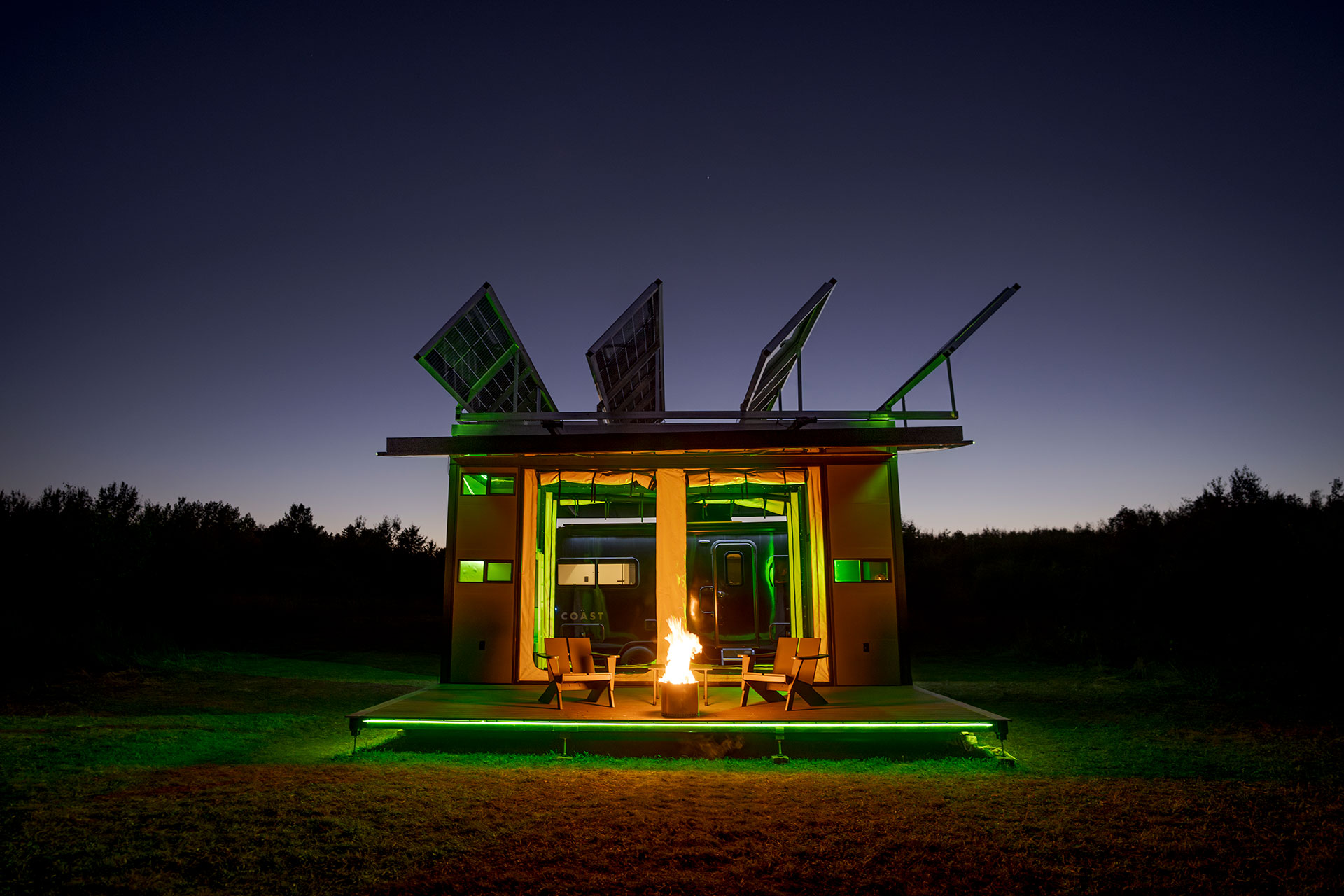
At Electric Outdoors, innovation doesn’t happen in isolation. It happens through the ongoing work of designing, testing, and improving the technologies that make reliable, independent energy infrastructure possible.
Recently, our Chief Product & Innovation Officer, Christian Stoehr, had the opportunity to bring some of that work into the classroom, sharing EO’s approach to energy systems, power electronics, and software with engineering students at the University of Detroit Mercy.
Here’s what he had to say about the experience:
“Last week, I was invited to give a guest lecture and share our work at Electric Outdoors with engineering students at the University of Detroit Mercy, joining Dr. Mohammad K. Al-Smadi’s Power Electronics class in the College of Engineering & Science.
At EO, we’re bringing solar, storage, power conversion, and software together to make useful energy available beyond conventional infrastructure, including the charging needs of electric mobility.
That work gives the classroom some very practical questions:
- How do you turn unpredictable sunlight into dependable power?
- Can software anticipate tomorrow’s needs and make smarter decisions with today’s energy?
- Can the way a device draws power reveal a problem before it fails?
- What does it take to turn a successful prototype into a system people can depend on every day?
We explored those questions through the EO Canopy, our software and simulation tools, real hardware, and a few fun demos circuits that puzzled some minds. The students brought their own ideas as well, including an electric go-kart project balancing autonomy, performance, and battery life. Different projects, shared engineering challenges.
My invitation to students, and to anyone reading this, is simple: Use the tools, labs, mentors and people around you now. Pick one small question. Build or simulate a first version. Measure what happens. Document what you change. You can start with one sensor reading, one moving servo, or one waveform that finally makes sense.
Thank you to the class for welcoming me and making room for the messy, creative, practical side of building a clean-energy startup. I’m grateful for the chance to connect our future engineers with the challenges of today.”
At EO, these are the kinds of questions we work through every day. Turning promising ideas into dependable systems requires more than good hardware. It takes thoughtful engineering, intelligent software, and continuous learning from real-world performance.
As we continue developing our distributed energy infrastructure platform, opportunities to share our work, challenge our thinking, and connect with emerging engineering talent are an important part of the process.
This is a look at just one piece of the work happening across our team. We’ll continue sharing perspectives from the people building and testing the technology behind Electric Outdoors.