If you’ve ever dreamed of creating a luxury campsite in the middle of nowhere—solar-powered, EV-friendly, and totally off-grid—now might be the best time to make it happen. Thanks to clean energy incentives, federal and state governments are basically helping fund the future of off-grid camping infrastructure.
This means that depending on your specific location and circumstances, you could see up to 60% off your investment in solar panels, EV chargers, and battery systems. And you don’t need to run a huge campground or be a clean-energy expert to qualify.
Let’s break down how these incentives work—and how Electric Outdoors can help you make the most of them.
Meet the EO Canopy
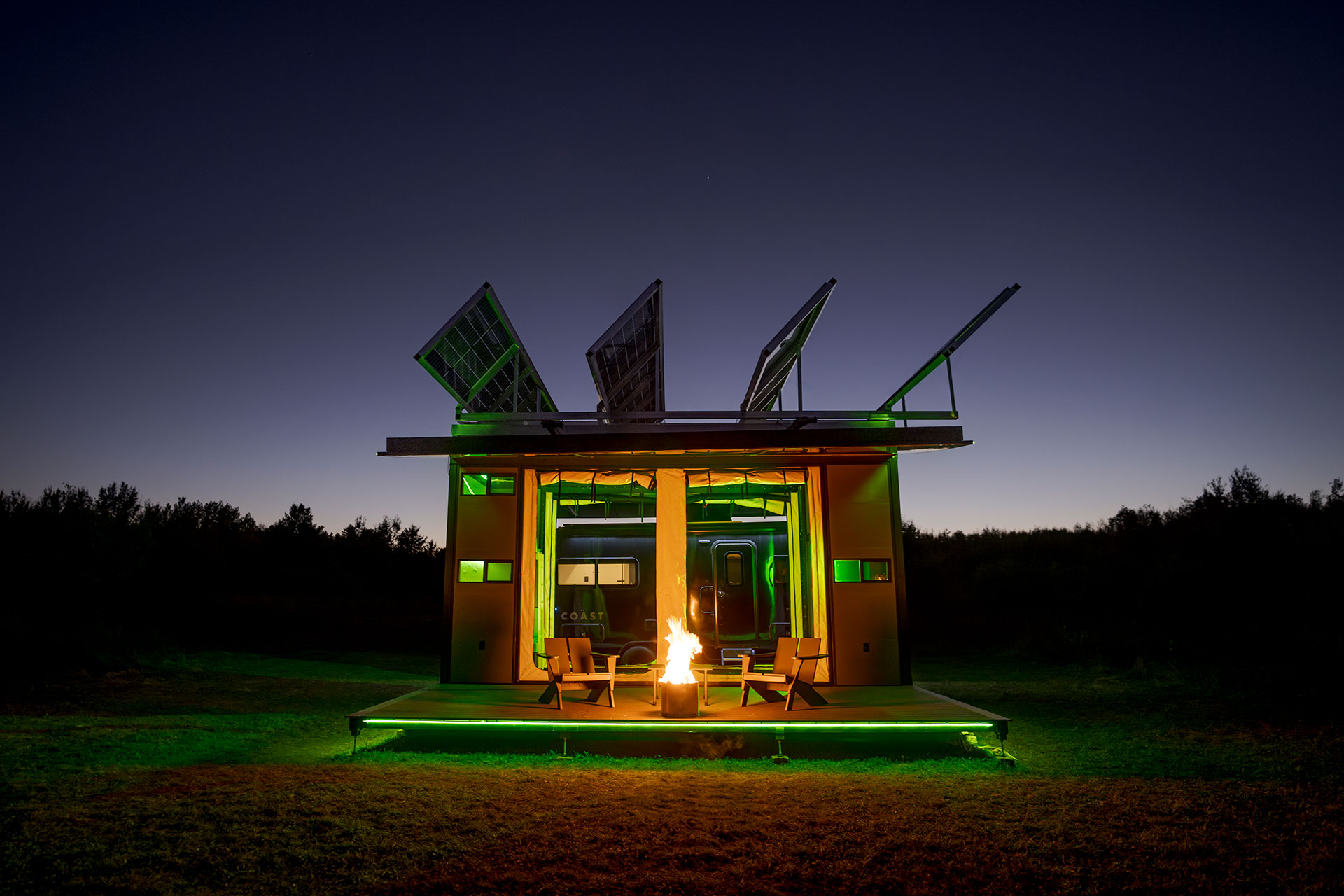
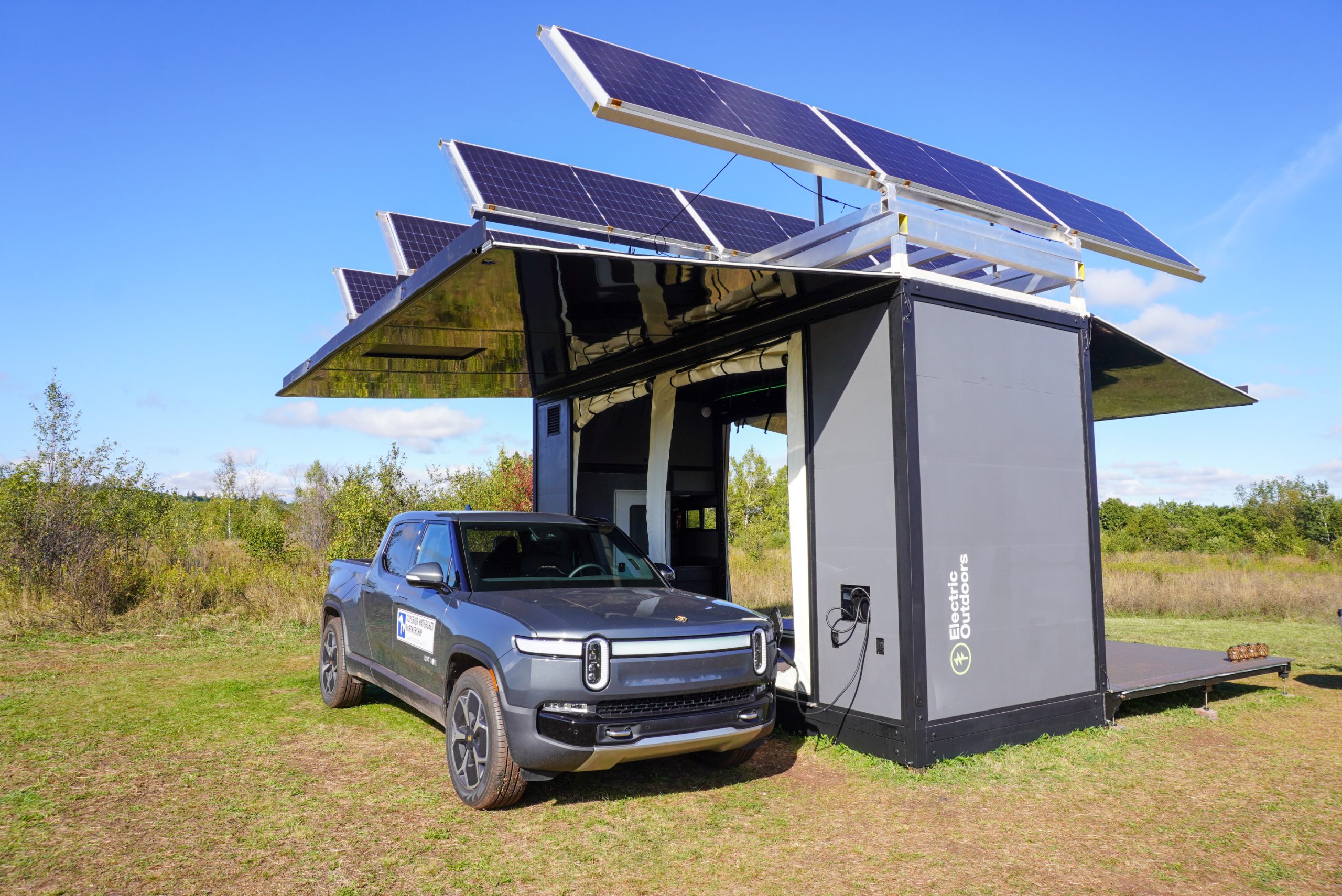
The EO Canopy is the all-in-one, off-grid camping solution from Electric Outdoors. It’s solar-powered, battery-backed, and comes ready to charge electric vehicles—even in remote locations. It features freshwater generation, satellite internet access, waste handling, and a comfortable indoor-outdoor living space with a kitchenette, wet bath, and sleeping area. Whether you’re adding a few glamping sites to private land or building out a full eco-tourism destination, the Canopy gives you modern infrastructure without needing a grid hookup.
And just about every part of the system qualifies for tax incentives.
Qualifying Tax Incentives
Thanks to the Inflation Reduction Act (IRA) and a host of state-level programs, qualified buyers can dramatically reduce the upfront cost of installing off-grid solar and EV systems like the EO Canopy. In many cases, incentives can offset up to 50% of the cost.
- Investment Tax Credit (ITC): As part of the IRA, the ITC covers up to 30% of the system cost, plus potential bonus credits for domestic content, energy communities, and workforce requirements.
- Alternative Fuel Refueling Property Credit: As part of the IRA, the Alternative Fuel Refueling Property Credit offers up to 30% back on EV charger infrastructure—up to $100,000 for businesses or $1,000 for homeowners.
- State Rebates: Varying across the country, some states like Michigan offer up to $5,000 per charger, while California rebates can reach $8,000 for Level 2 or DC Fast Chargers.
These savings can be combined, meaning your actual investment could be far lower than you think.
To understand how these incentives can apply to your specific situation, we recommend an initial conversation with your CPA or tax and financial expert. Once you have a better idea of which incentives make the most sense for you, Electric Outdoors can guide you through qualifying for them.
Who Can Benefit?
From national parks to private landowners, the opportunities are vast:
- Campground operators can install EO Canopies to expand capacity without grid hookups.
- Festival and event organizers can deploy clean, quiet energy hubs on-site.
- Individual landowners can combine personal and business-use incentives to offset costs.
How Long Will These Incentives Last?
It’s worth noting that many of these clean energy tax credits and rebate programs stem from the IRA and other existing legislation. While these incentives are currently driving down the cost of sustainable infrastructure, they aren’t guaranteed to stick around forever.
As political priorities shift, some proposals could scale back or even eliminate certain clean energy programs. While nothing is final, it’s just a reminder that today’s incentives represent a unique window of opportunity for landowners, campground operators, and eco-minded entrepreneurs who want to build sustainable infrastructure while it’s most financially viable.
Ready to Plug In?
With a perfect storm of policy support and next-gen infrastructure, Electric Outdoors is making it easier than ever to go off-grid without going over budget, whether you’re looking to build or expand a campground, build a festival-ready microgrid, or simply make better use of your land.
Contact us to learn more about the EO Canopy and how Electric Outdoors is making sustainable infrastructure more accessible than ever before.